The Church of SoulCycle: The Rise of Social Group Piety
posted on 05-24-2019 by scotty
Founded in 2006, SoulCycle is a different kind of gym. Now expanded to eighty-five locations across the United States, these boutique stationary bicycle studios have generated a cult following that is as difficult to explain as it is popular. SoulCycle disciples pay about thirty-five dollars for forty-five minute sessions with group instructors—it’s a great workout, but compared to other exercise options, even other spin classes, it’s expensive. So why do its adherents rival the Dead Heads in loyalty?
The answer isn’t explained completely by America’s renewed focus on health and well-being. SoulCycle is a social and cultural experience that is not unlike a religion—instructors are quick to emphasize a sense of self and spiritual connection. That’s not the whole story, but the popularity of a fitness routine with such loyal followers is also rooted in a cultural shift beginning in the 1990s: the great departure from devout religiosity amongst America’s young people.
 the chafe chapel (image via d magazine)
Religious affiliation amongst the American populous, particularly amongst younger people, has declined sharply over the last thirty years. Growth of other kinds of social groups over this time period has increased thanks in part to the internet age. People have replaced religion with other activities, like SoulCycle, that give them a group identity. Religion has long been associated with increased levels of happiness, but perhaps the future of American culture leans more toward a kind of piety within chosen social groups and identities rather than in organized religion.
Millennial author Alex Abad-Santos recently recounted his experience in the sweaty, loud, low-light pseudo-chapel of SoulCycle’s Lower Manhattan location for a feature in Vox magazine:
“…even though SoulCycle's atmosphere can be competitive, it also forges respect, friendships, and bonds. You start learning people's stories, why they're in there, what they're going home to, and what they do when they're not sweating their faces off. You learn about how some riders come to class because they want to lose weight and change their lives, or because it's the only time they have to themselves, or because they want to look good for a vacation they've saved up for.”
The connections, friendships, and reasons for being discovered and nurtured in the crucible of heart-pounding intervals on one of SoulCycle’s specially-designed bikes are not dissimilar to the things people look for in organized religion. There are key differences, of course, but the hefty class price tag is reminiscent of a tithe, the specially trained instructors akin to clergy, the specific type of clothing and shoes parallel to religious garb. Athletes often talk about the “flow” they experience in training or competition, and the psychological benefits of this intrinsically rewarding loss of self in complete focus are numerous.
 scotty experiences flow at a race in logan, utah (image via my instagram)
Religious rituals, too, draw on flow experiences that involve focus, meditation, and in some cases physical movements. For an increasingly secular populous, purposeful social groups can serve as a new outlet for experiences like flow that are crucial to create meaningful and lasting happiness once associated primarily with religion.
American Apostasy
According to studies by Pew Research and Jones, Cox, Cooper, and Lienesch, devout religious attendance has seen a sharp decline since the 1990s. Thirty years ago, about ten percent of eighteen to twenty-nine-year-old Americans were “unaffiliated” with any religion. Today, that number has jumped to thirty-nine percent. Indeed, all age groups have seen an increase in departure from organized religion, but the shifts over time are disproportionately younger. Unsurprisingly, children of unaffiliated parents are much less likely to be affiliated with a religion as an adult. When children are raised in a specific religion but don’t affiliate as adults, they are most likely to have left before their eighteenth birthday (six of every ten people) and almost certainly will have left by the time they turn thirty (another three in ten). The majority of people who leave the religion they were born into still claim a belief in God (in fact, eighty-nine percent of the general American population still claimed a belief in God as of 2014), citing other reasons for their departure—clergy sex abuse scandals, dissatisfaction or lack of belief in particular teachings, and poor treatment of the LGBT community top the list (younger people are three times as likely to cite this reason than older people).
 maybe we should convert abandoned churches into excercise studios (image via zfein.com)
Such a rapid cultural shift could be cause for alarm, especially given the changed world today’s children face as compared to their parents and grandparents. One study linked lower levels of behavioral problems and higher rates of community involvement to teens who are part of religious groups. Religion has historically been linked to higher levels of happiness, health (researchers even found higher rates of physical activity amongst members of the Church of Jesus Christ of Latter-day Saints than the general population in the 1990s), and fulfillment, so could society’s departure from religion be linked to the increased frequency of depression and suicide? Perhaps, but no evidence has been presented to substantiate the claim.
We do know that as a society we are more productive and more time stressed than we were thirty years ago; workers complete tasks that would’ve taken forty hours in 1990 in just twenty-nine hours. Children and teens are more involved in more numerous and more serious extracurricular activities that improve their work ethic and connect them to friends. Some would argue having less free time keeps them out of trouble, but are they better off?
A New Kind of Community Church
A consolation to concerns about our cultural shift lies in what Harvard Divinity School’s Angie Thurston and Casper ter Kuile call “deeper community.” They propose that the rise of the spiritual-but-not-religious plurality has created a void in religious institutions that has filled itself with other social groups. Membership in such a group offers a chance for personal growth and fulfillment. Numerous studies of group affectlink a group dynamic to increased productivity and happiness—finding like-minded people inside and outside of religion makes us better and happier.
For some, social groups like a 5:45 AM SoulCycle class fulfill needs left empty by lackluster or inconsistent church attendance. Disciples of CrossFit, Jazzercise, or any other exercise group may feel they reap the same benefits, even without SoulCycle’s obsessive focus on development of the self. In fact, many social groups offer a sense of community not unlike a church congregation.
Jeep owners ritualize the “jeep wave” when they see each other on the streets, bond over the construction and modification of their vehicles, and even have regular meetings to learn their craft from each other as they share their favorite off-road spots. Fans of media series devote inordinate amounts of time to learning about their favorite comics, books, and movies and gather at events like Comic Con to celebrate them. Some people find a social circle in sports—they gather in homes and bars to worship their favorite professional players and teams. Parents follow their children hundreds of miles to innumerable games, practices, and camps—the phrase “we’re a football family” has developed an understanding and association as recognizable as “we’re Catholic.”
Pop culture finds people connecting their shared beliefs in coffee shop booths rather than pews. And the internet’s communication revolution only amplifies our voices to realize the shift and its allowance for us to find people who think like we do—we can find news outlets that curate the content we’re most interested in, gain Twitter followers who appreciate our point of view, and be part of virtual communities on Reddit and Facebook.
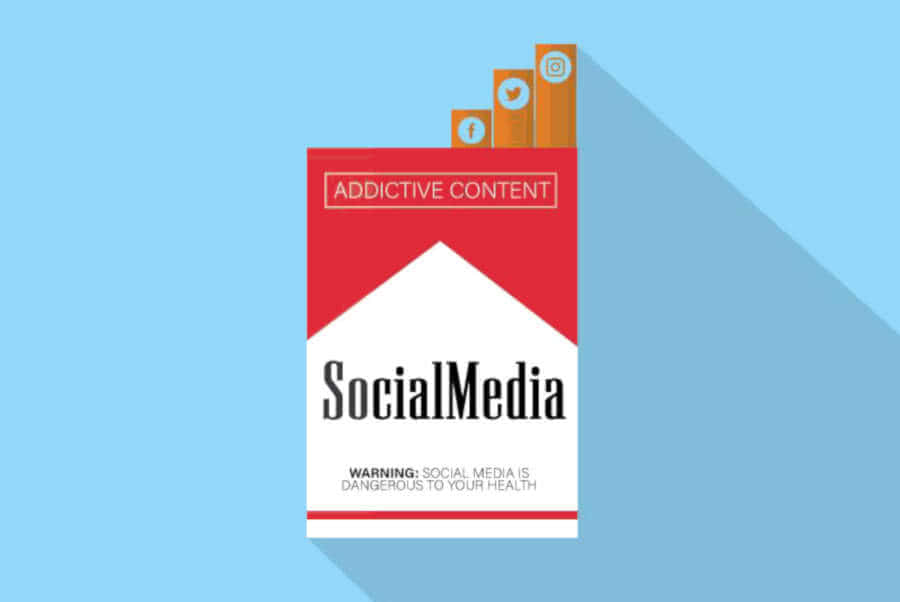 make like Danny Zuko and cut down to two packs a day (image couresty of Recovery Direct)
Of course, tweets and posts are no replacement for interpersonal human contact— Kirmayer, Raikhel, and Rahimi studied and postulated about the effects of the internet, recognizing that it allows us to develop a more refined and complete personal identity, but doesn’t offer a totally accurate view of reality. Perhaps its biggest danger is that we don’t understand it fully enough to recognize or predict its consequences, so we shouldn’t put all of our eggs in that basket.
Recent political rhetoric and scandal surrounding social media algorithms and their place in the 2016 Presidential election illustrate the consequences of becoming stuck in virtual feedback loops. If we are to become happier and more fulfilled by our membership in community groups, we should use internet as a tool for connection rather than the only means, which is good news for brick and mortar companies like SoulCycle and bad news for at-home solutions like Peloton (a specially designed home stationary bike connected to virtual classes led by real instructors, founded in 2012).
Working Class Woes
High-speed internet access is widespread and increasing, but remains a luxury the poor don’t have equal access to. As it becomes a crucial part of the way we interact with each other, slower or less reliable internet access has consequences. If the internet increases social and community connection, lack of access could actually lead to greater isolation. In a recent study called No Money, No Honey, No Church, researchers identified higher rates of departure from organized religion amongst working-class white folks with a simultaneous drop in real wages, marriage, and pregnancy outside marriage. In short, they identified that the shift feeds itself (dissatisfaction with religion tends to decisions like premarital sex that ostracize individuals from religious communities) and leads to greater isolation within working-class whites from each other and between other classes and ethnic groups.
 a group of men from the WPA construct a road in tennessee (image couresty of The Atlantic)
Comorbid with a disconnection from technology now so entrenched in middle- and upper-class American life, this move away from religion could have dire consequences for a group of people not likely to shell out thirty-five dollars a session to be part of the gospel of SoulCycle. There could, however, be other reasons to explain the shift in this group that is more likely to receive benefits from the government.
Sociological researchers recently discovered that better government services are correlated with lower levels of religiosity—in essence, people are less likely to go to God when their needs are being met by the government. They feel a greater sense of security and providence and don’t feel the need to be comforted or validated by a metaphysical power. This trend shouldn’t, however, advocate for an Orwell-like state of government-sponsored subsistence without any religious faith. Indeed, the researchers in No Money, No Honey, No Church emphasize the importance of religion in promoting civic and political engagement in the white working class.
 this is serious business (image couresty of The New York Times)
Not everyone is an exercise junky. SoulCycle’s social church of sweat and a relentless work ethic won’t serve the needs of everyone who walks into their candle-lit studios, but the same can be said of any social group, including religion. There’s no one-size fits all solution to the challenge of interpersonal connection. Instead, individuals must find the groups and people that help them be happy and fulfilled. Along the way, activities and groups should lead individuals to flow experiences and increased intrinsic motivation through belief in their competence and their feeling of relatedness to other people.

Scotty Kinkade is a student, marketer, and runner at BYU in Provo, UT. Special thanks to Dr. Brian Hill for inspiring and supporting this story. Connect with Scotty on social media at the links below! And don't be afraid to give me a clap on Medium.